

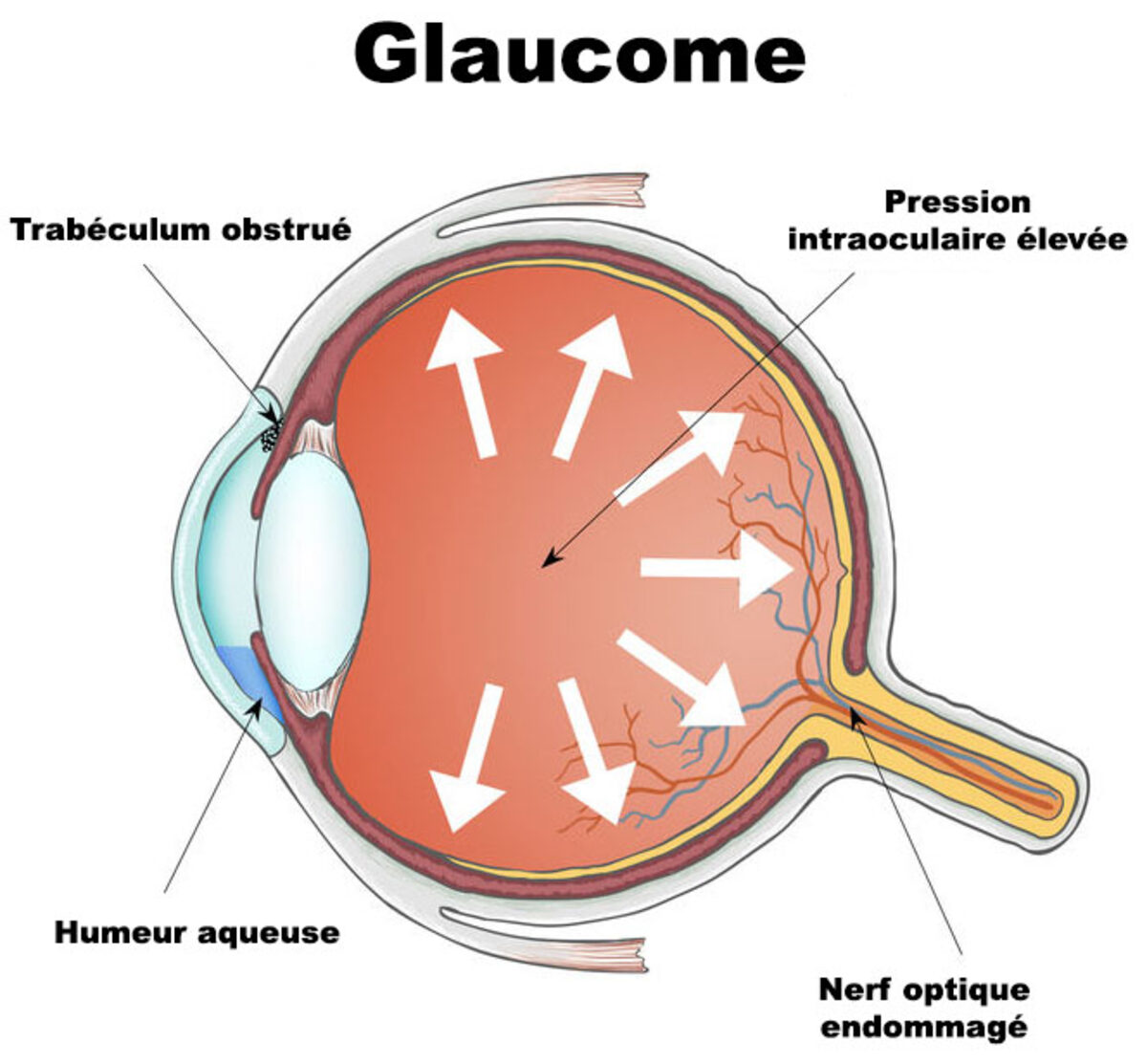
Chronic glaucoma is a degenerative disease of the optic nerve, the nerve that carries the image seen by the eye to the brain. The loss of optic nerve fibres is irreversible: the nerve cannot be replaced and no transplant is possible.
A disease you cannot feel
You only notice it yourself once the loss of the optic nerve reaches nearly 90%. Before that, the brain compensates by filling in the gaps in the visual field. Everyone should therefore be screened from the age of 40, and earlier if there is a family history.
The different forms
Chronic open-angle glaucoma
The gradual loss of the optic nerve is most often caused by excess pressure inside the eye. Intraocular pressure is statistically normal between 8 and 21 mmHg, but about 20% of chronic glaucomas occur at normal pressure, with other factors at play: genetics, blood pressure, diabetes, migraine, Raynaud's syndrome.
Acute angle-closure glaucoma
This is a sudden rise in intraocular pressure (sometimes up to 70 mmHg) caused by a mechanical blockage inside the eye. Symptoms include headache (sometimes with vomiting), redness, blurred vision and a fixed pupil. Treatment is mainly preventive, through laser iridotomy.
Secondary glaucomas
These are complications of another eye disease: inflammatory diseases, diabetic retinopathy, retinal thrombosis.
How is it diagnosed?
Diagnosis relies on measuring intraocular pressure, examining the fundus, pachymetry (corneal thickness), the visual field and optical coherence tomography (OCT), an ultra-modern test allowing the earliest detection.
Frequently asked questions
Can glaucoma be cured?+
No. The damaged optic nerve does not regenerate. Treatments stabilise or slow the disease, which is why early detection is essential.
From what age should I be screened?+
Everyone should be screened from the age of 40, and earlier in the case of a family history of glaucoma.