Age-related macular degeneration (AMD) is a retinal disease that affects people over fifty. It damages the macula, the small central area of the retina responsible for precise vision, essential for reading.
The dry form
The dry form accounts for about 90% of cases and takes two aspects:
- The atrophic form: a gradual disappearance of the macular retina, mainly genetic in origin, which is difficult to halt.
- The "drusen" form: a build-up of metabolic waste beneath the retina, with a high risk of converting to the wet form.
Early detection allows monitoring to be set up and risk factors to be reduced. Treatment with specific vitamins and antioxidants lowers the risk of conversion. In AMD, monitoring is already taking action.
The wet (neovascular) form
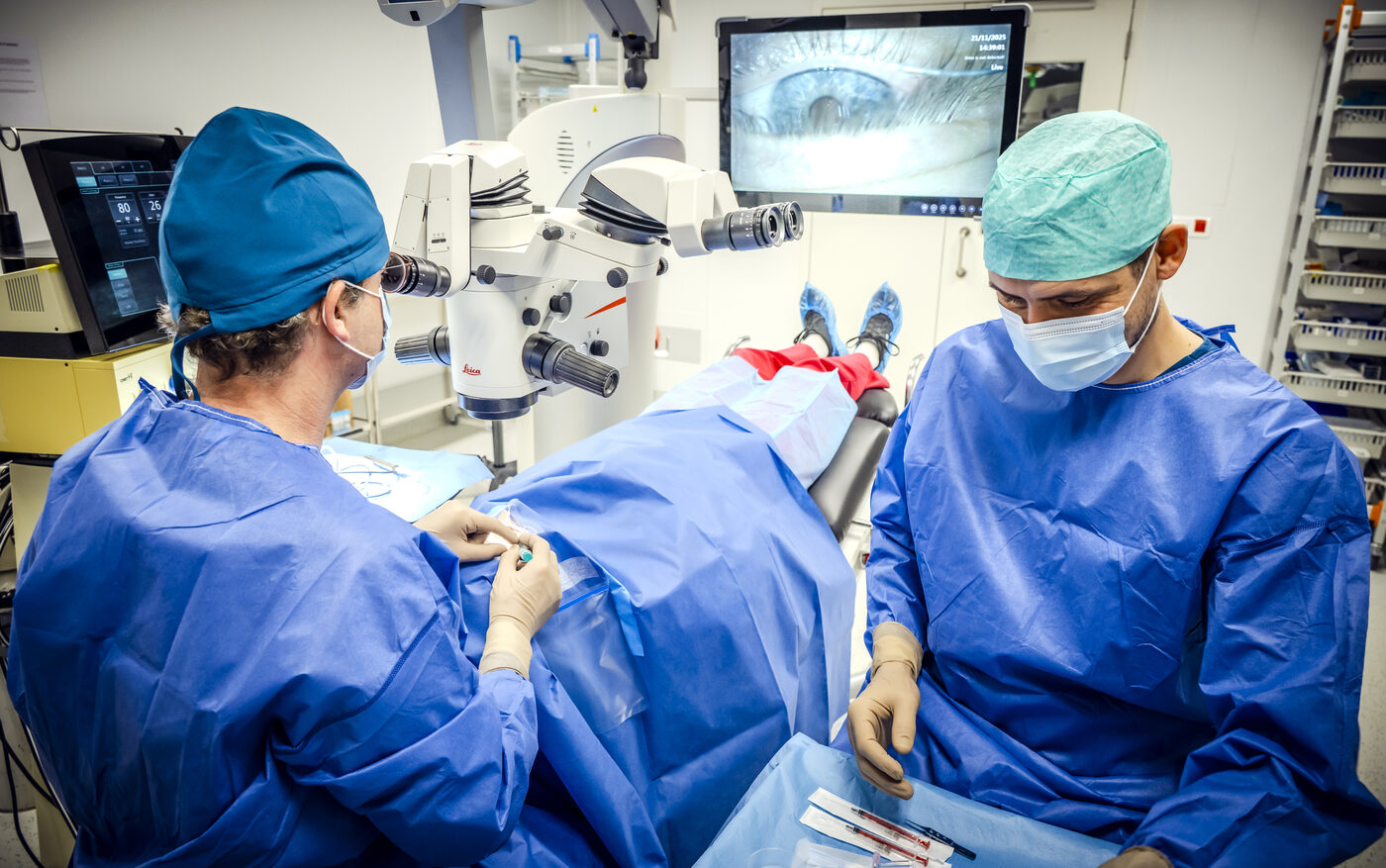
A complication of the dry form, it is caused by abnormal vessels that develop beneath the macula, lift it, then leak and bleed. Vision loss is often rapid: treatment is a relative emergency and must begin as soon as possible.
The examinations
Monitoring relies on checking for metamorphopsia (wavy distortions in vision) with the Amsler grid, the fundus examination, colour retinal photography, digital fluorescein angiography and optical coherence tomography (OCT) of the macula.